
Vedanta group chairman, Anil Agarwal, 69, is well known for his business journey from a scrap dealer from Bihar to a London-based globe-girdling metal and oil and gas conglomerate with revenues of $19 billion. Now his abilities to keep his group from over-leveraging itself will be put to the test. Over the years, Agarwal, now based in London, set up the conglomerate via acquiring iron ore producer Sesa Goa, Cairn's oil producing assets in India, and Electrosteel Steel.
Over 100 chemical storage tanks built at the Pirpav jetty near Chembur have been operating without approvals from the ministry of environment and forests for over 18 years. Each of these tanks has an average capacity of 200,000 kilolitres of oil.

Getting compensated for at least 90 per cent of losses without government subsidy appears difficult.
The gvernment said on Tuesday that contingency plans have been drawn to maintain continuous supply of petroleum products if the employees of privatisation bound Hindustan Petroleum Corporation Ltd go on strike.\n\n\n\n
Vijay Mallya-owned Kingfisher Airlines owes state-run oil companies over Rs 950 crore (Rs 9.50 billion0 in unpaid fuel bills while financial crisis-hit NACIL has cleared almost two-thirds of its outstanding.
OMCs losing Rs 20 crore daily on sales, 18 months after prices were deregulated.
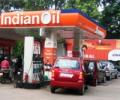
IOC and its sister PSUs, Hindustan Petroleum and Bharat Petroleum, sell diesel, domestic LPG and kerosene at rates way lower than their imported cost to help government keep general price inflation under check.

Kaushik Basu, chief economic advisor in the finance ministry, said, "All I can say is, we are very serious about fiscal consolidation, and intend holding on to our fiscal targets, even if the crude price rises on a sustained basis."
Higher crude oil prices have almost doubled the under-recoveries of government-owned oil marketing companies -- Indian Oil Corporation, Bharat Petroleum and Hindustan Petroleum -- in the past three years.
A series of rises in petrol price following its decontrol on June 25 last year has increased the state governments' earnings from value added tax on petrol by around 21 per cent.
Despite raising petrol prices by around Rs 2.95 a litre - the second-biggest increase in this calendar year so far - public and private retailers are losing Rs 50 crore a day on selling the auto fuel.
The public sector oil refining and marketing companies Indian Oil Corporation, Hindustan Petroleum Corporation and Bharat Petroleum Corporation are back on the radar of investors as their profit levels reach record highs.
Last month, Indian Oil Corp, Bharat Petroleum and Hindustan Petroleum were losing Rs 390 crore (Rs 3.9 billion) per day on sale of petrol, diesel, kerosene and domestic LPG. This month, losses have come down to Rs 352 crore (Rs 3.52 billion) per day, an industry official said.
The under-realisation on fuel sales incurred by the oil marketing companies is projected to rise by 14 per cent to around Rs 760 crore (Rs 7.6 billion) per day in the first fortnight of July from Rs 680 crore (Rs 6.8 billion) per day in the second fortnight of June.
Government has scrapped kerosene imports by private companies and decided that only state-run firms will import the fuel to end its adulteration in diesel.
Reliance Communications Ltd's subsidiary Reliance Mobile World on Wednesday announced introduction of LPG gas booking service on mobile phones.
While BPCL has been ranked third in the poll, Reliance is at the fourth position adn HPCL 8th.
Petroleum Minister Murli Deora is likely to meet Finance Minister P Chidambaram later this week to seek greater compensation for oil companies, who are currently losing about Rs 450 crore (Rs 4.5 billion) a day on fuel sales. Indian Oil, Bharat Petroleum and Hindustan Petroleum are likely to see doubling of revenue loss on sale of petrol, diesel, domestic LPG and PDS kerosene to Rs 150,000 crore. The three fuel retailers together lost Rs 77,304.50 cr on fuel sale in 2007-08.
Besides IOC, Royal Dutch Shell is believed to have evinced interest in reviving the petrol pumps, industry sources said. Reliance, as part of a two part bid process, had sought expression of interest from IOC, Shell, Bharat Petroleum and Hindustan Petroleum by Friday for a possible partnership for reopening the petrol pumps.

Drivers of commercial vehicles, including trucks and tankers, stopped work in several states on Monday and blocked roads at some places to protest against the provision in the new penal law regarding hit-and-run accident cases involving motorists.
After a year of sluggish growth in fuel retail outlets, the three state-run oil-marketing companies--Indian Oil Corporation, Bharat Petroleum Corporation and Hindustan Petroleum Corporation--have chalked out aggressive plans for expansion in the next financial year. They will be commissioning over 2,100 outlets in 2009-10--over three times what they added in the current year--at an investment of about Rs 1,200 crore.
SBI Capital Markets Limited, the merchant banking arm of SBI, is eyeing the twin accounts of HPCL and BPCL for managing the divestment programmes of the 2 oil cos.
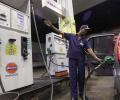
Petrol price in Delhi was hiked to Rs 77.28 per litre from Rs 76.73, while diesel rates were increased to Rs 75.79 a litre from Rs 75.19, according to a price notification from State oil marketing companies. Rates have been increased across the country and vary from state to state depending on the incidence of local sales tax or VAT.
